Garden Phoenix · Genetics
The Parent Genes
Where they came from. What they carried. What they passed on.
Every Garden Phoenix specimen has parents. Commercial varieties, open-pollinated lines, seed-house selections — plants that were shaped by human hands into prescribed forms, carrying latent genetic possibility they were never given space to express.
Understanding the parents makes the children make sense.
This page documents the source material — the commercial and open-pollinated celosia varieties that have been grown at Queen Bee Blooms over the years, whose genetics now mix freely in the rewilded beds.
Plumosa Lines
The Plume Parents
Commercial and open-pollinated Plumosa varieties grown at Queen Bee Blooms. Their plume genetics now flow freely through the rewilded population.
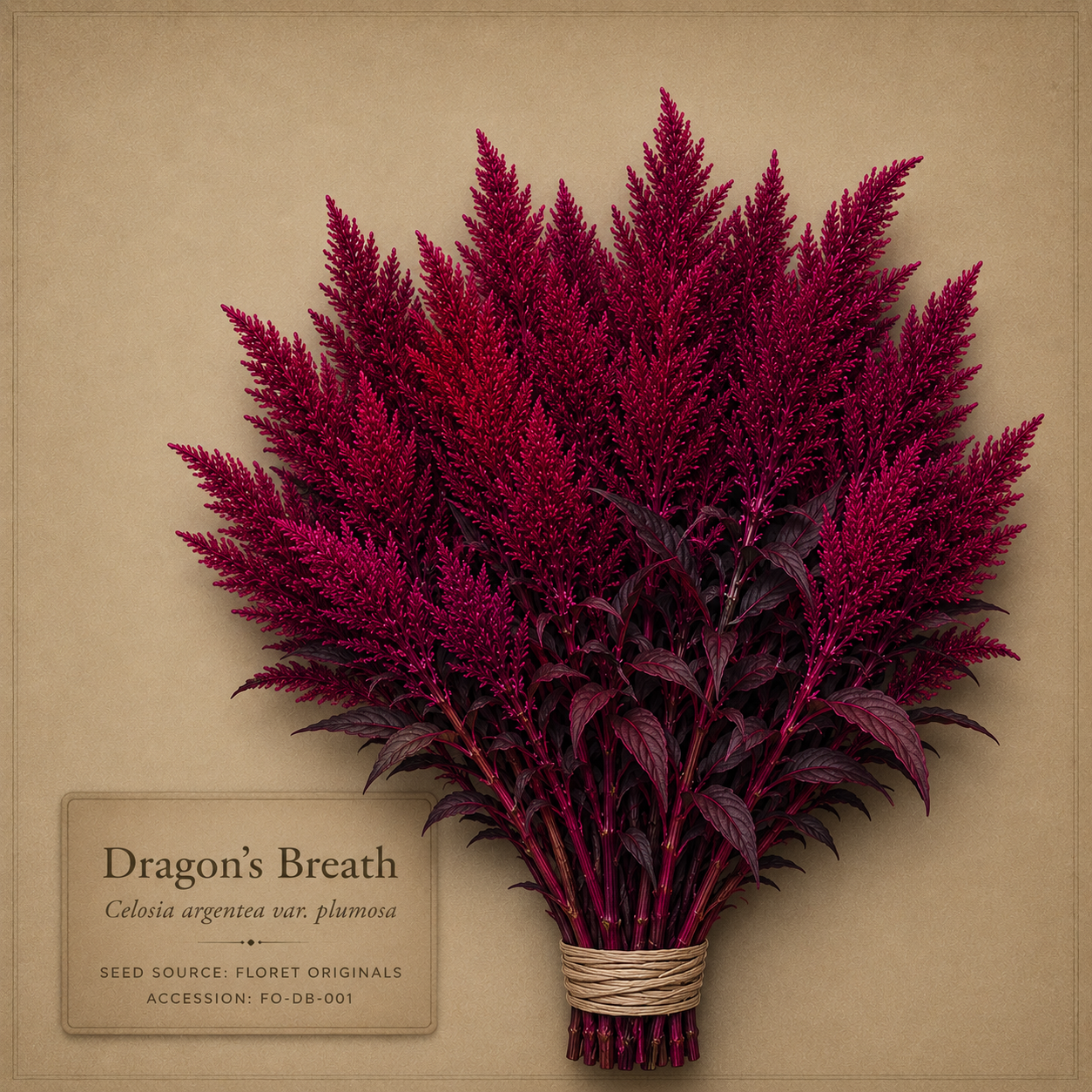
Dragon's Breath
Plumosa · Ember / Verdant Ash
Deep red plumes with striking dark, near-black foliage. One of the most dramatic parents in the collection. Her foliage genetics appear throughout the Verdant Mark specimens.
Commercial
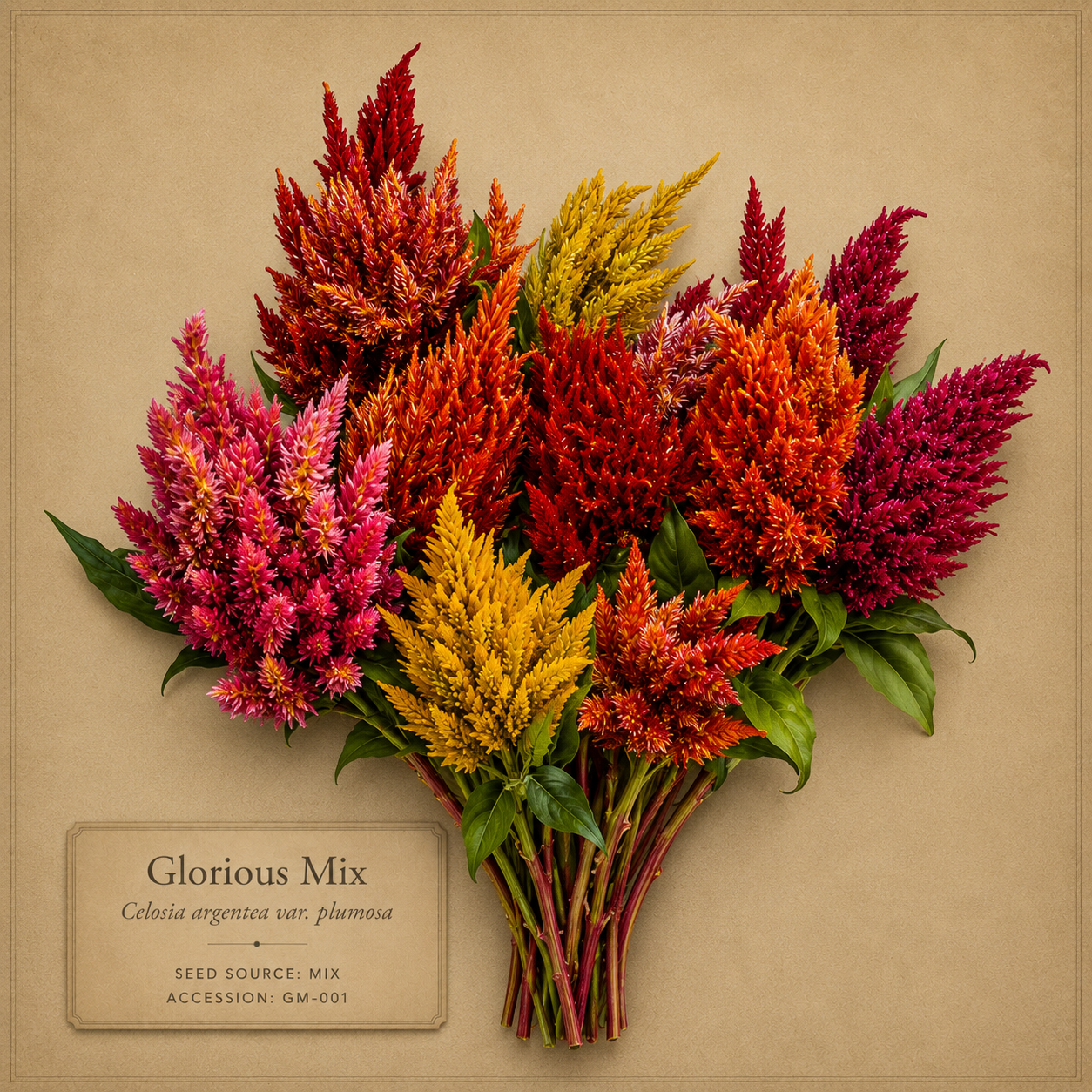
Glorious Mix
Plumosa · Mixed Color
A wide-color mix with significant genetic diversity. The color range in the rewilded beds — from Ghostlight to Ember — traces partly to this line's varied parentage.
Commercial
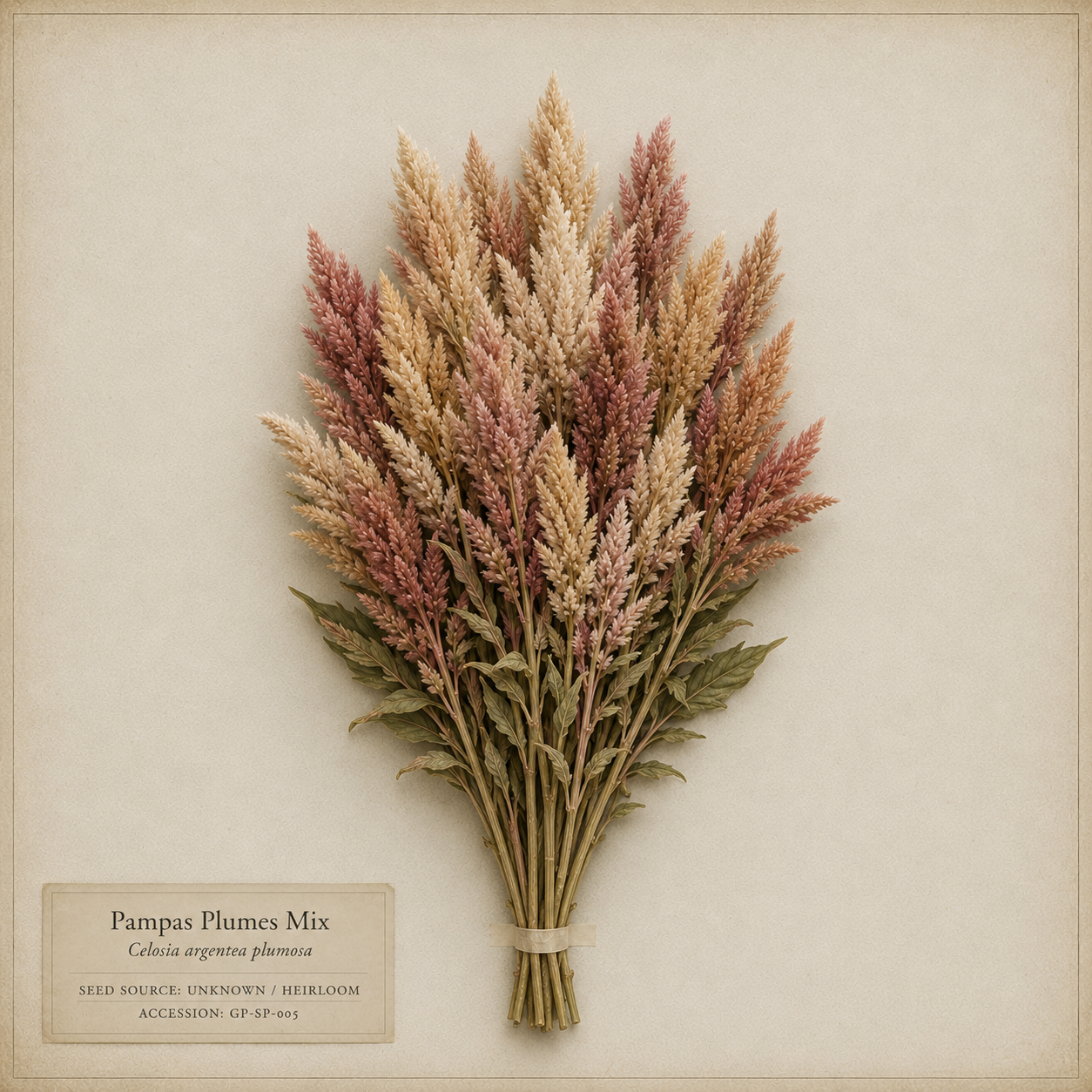
Pampas Plume
Plumosa · Pale / Dusty
The Smoke Veil and dusty hue traits in several specimens may trace to this pale-toned parent. Soft, fine feathering.
Commercial
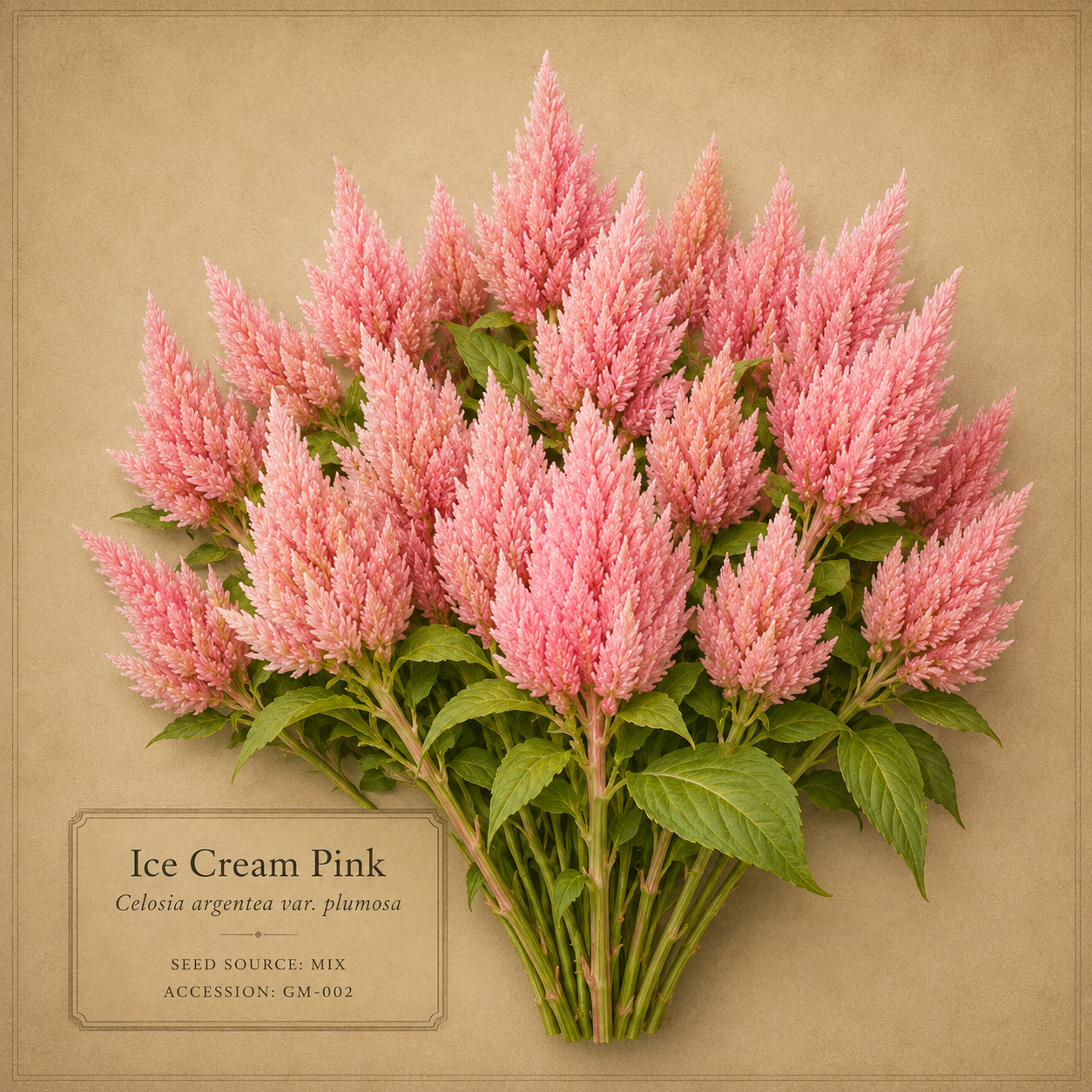
Ice Cream Pink
Plumosa · Rosefire / Pale
Soft rosefire, tall and clean. The Rosefire Pale Glow readings in Delicate Blush Ruffle likely trace to this parent's genetics.
Commercial
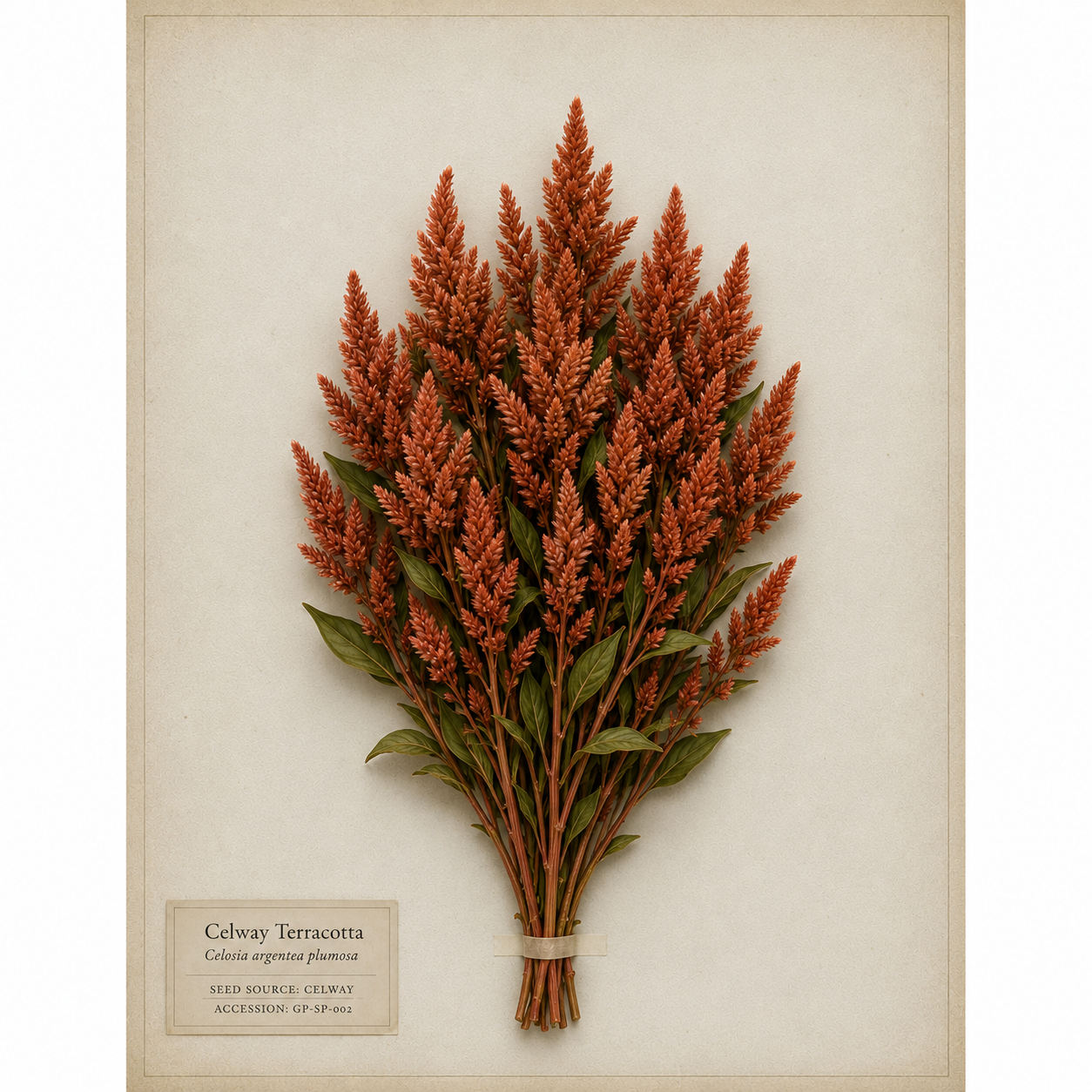
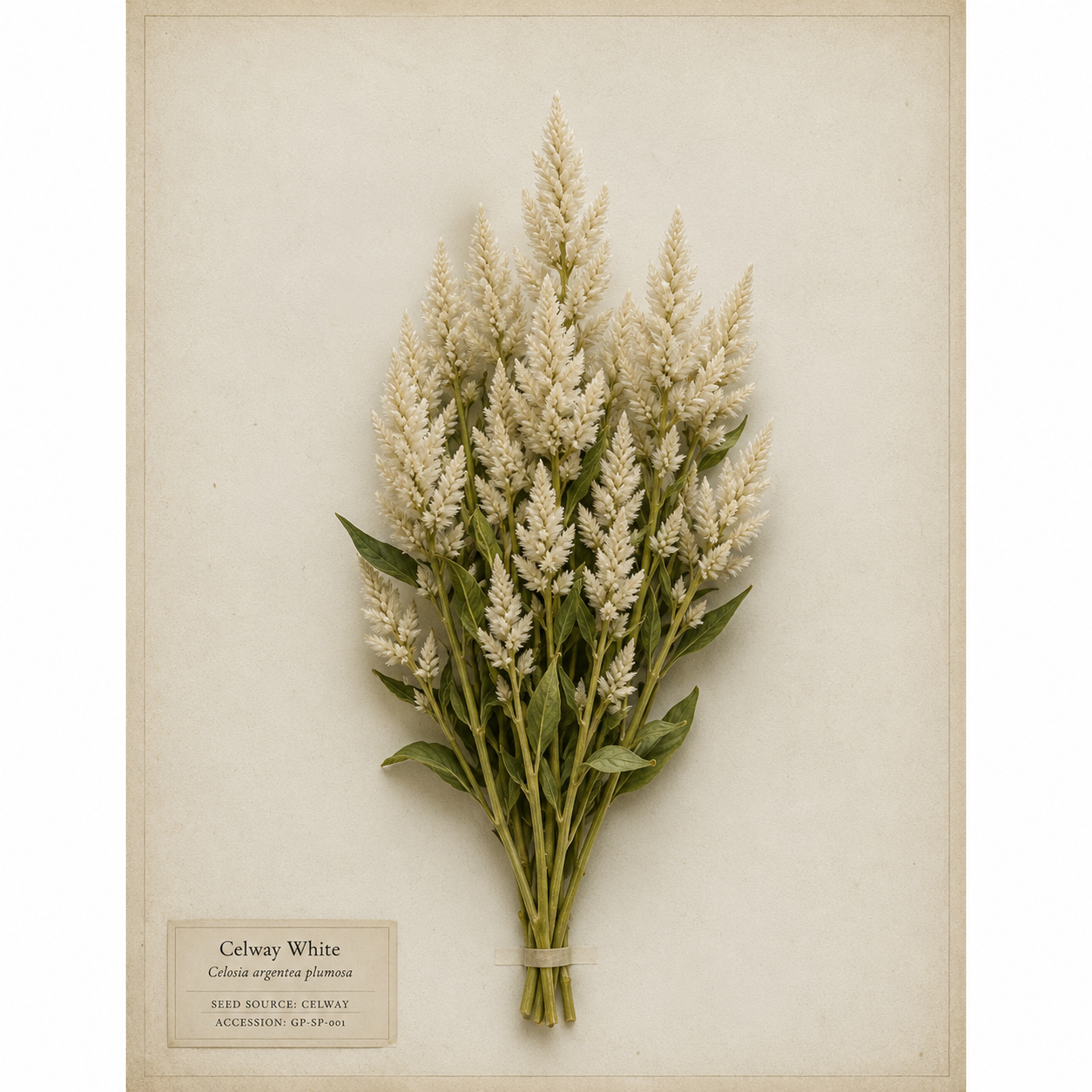
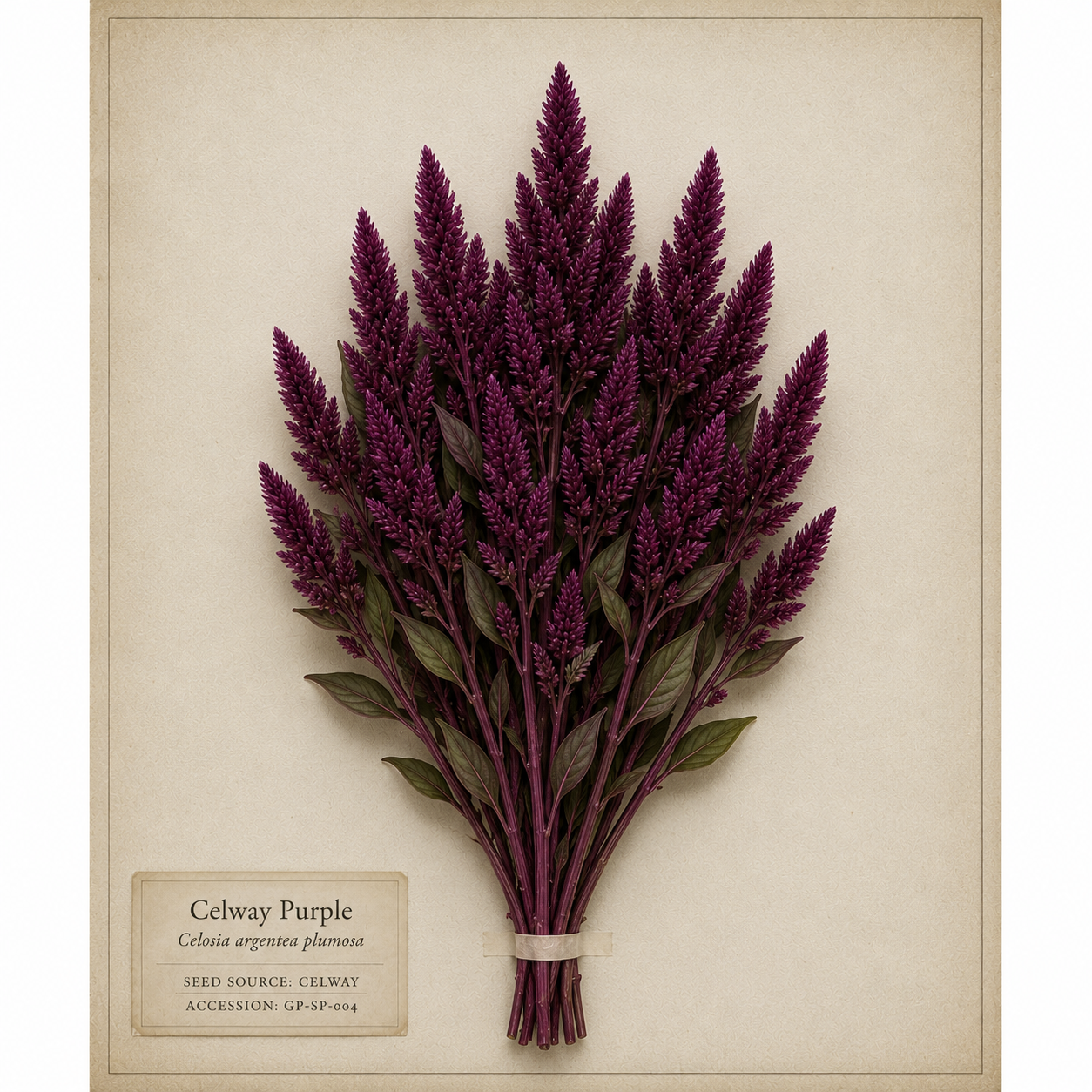
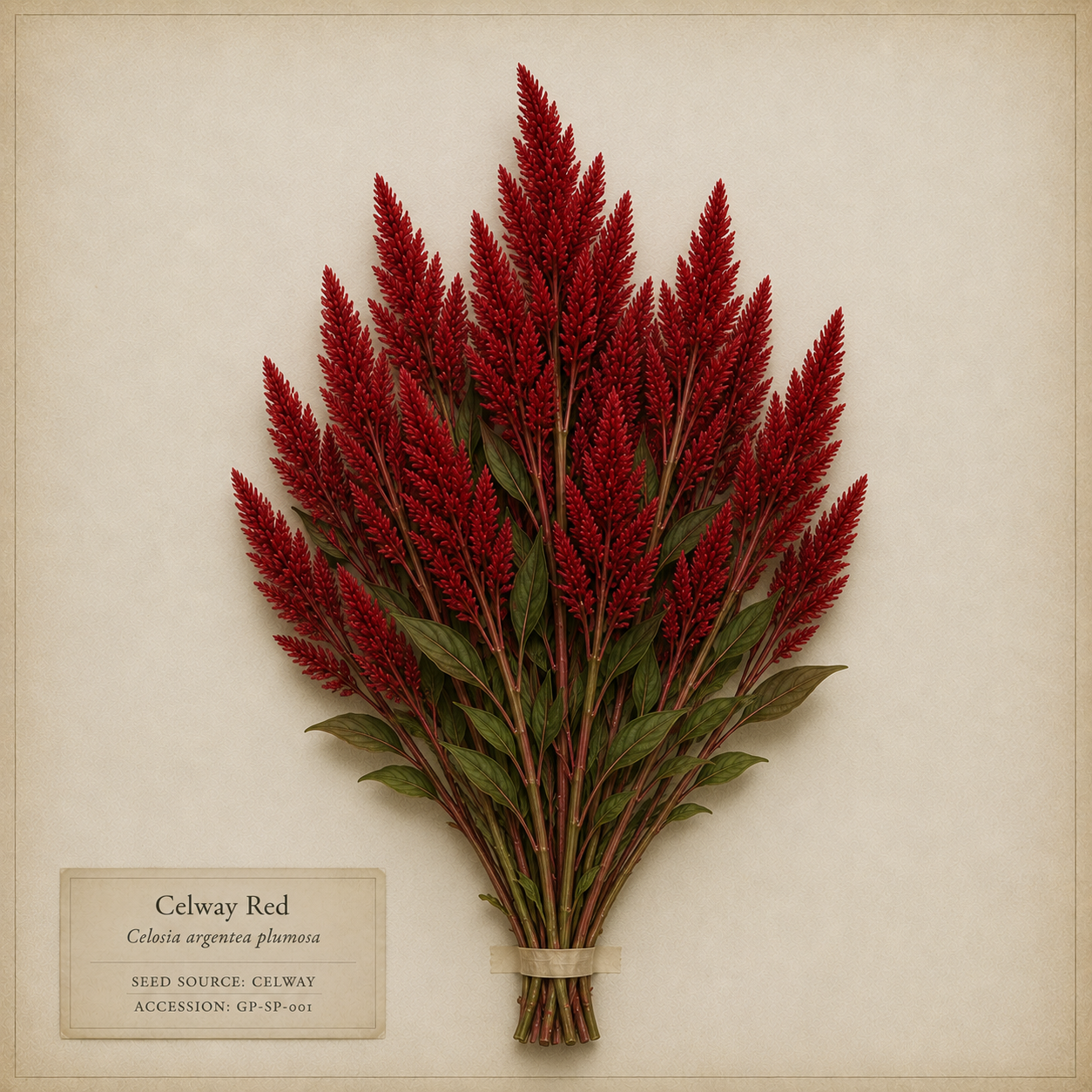
Celway Series
Plumosa · Multiple colors
Red, White, Purple, Terracotta variations. The purple and terracotta genetics in Chimera Dustveil Phoenix and Copper Rosa may carry Celway lineage.
Commercial · Ball Seed
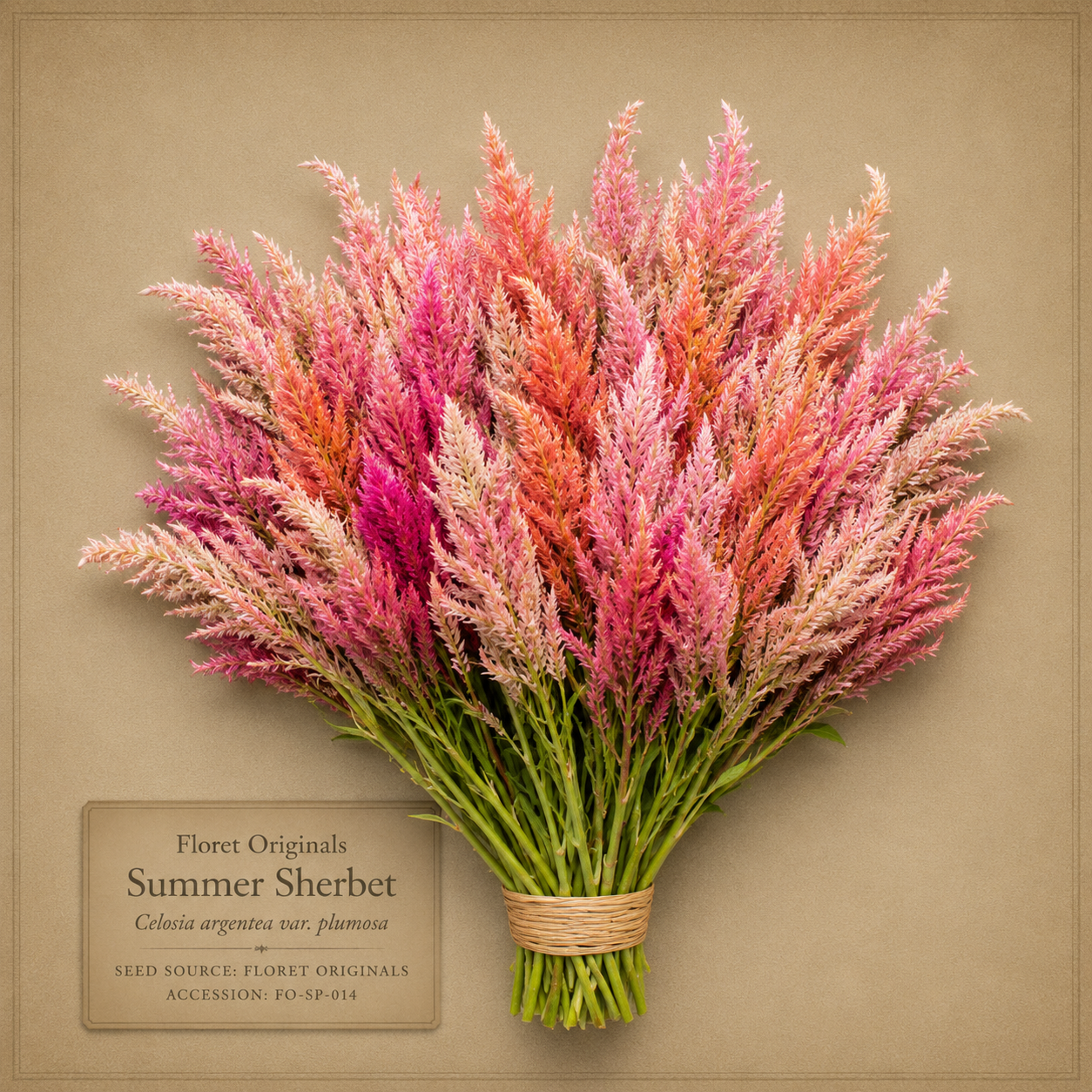
Summer Sherbet
Plumosa · Warm Mix
Floret's warm-toned plumosa mix — peach, apricot, and coral. One of the most likely contributors to the peachy and melon-toned specimens in the rewilded population.
Floret Farm
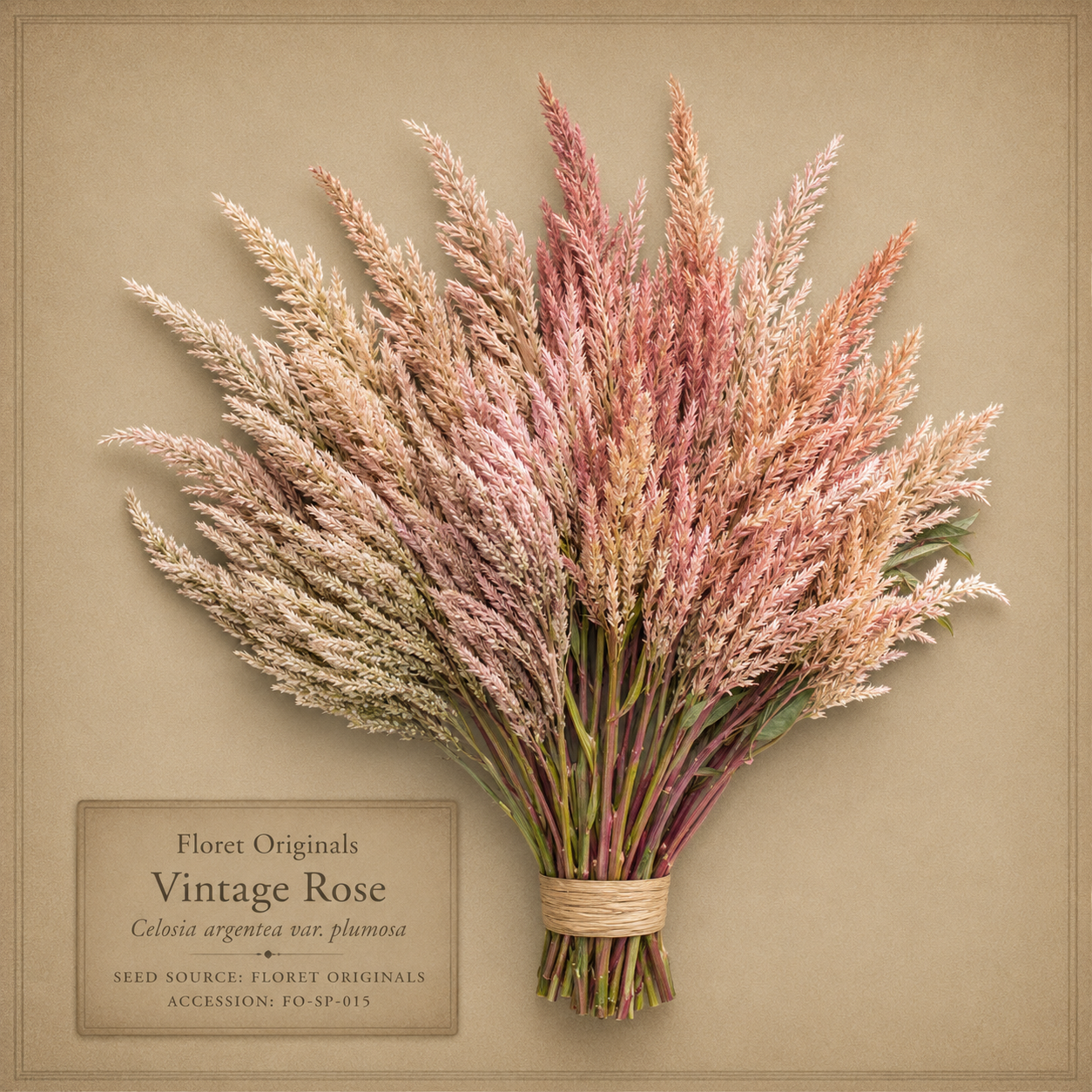
Vintage Rose
Plumosa · Rosefire / Dusty
A dusty, antique rose plumosa from Floret. Her muted, aged tones appear in the Smoke Veil and blush specimens throughout the collection.
Floret Farm
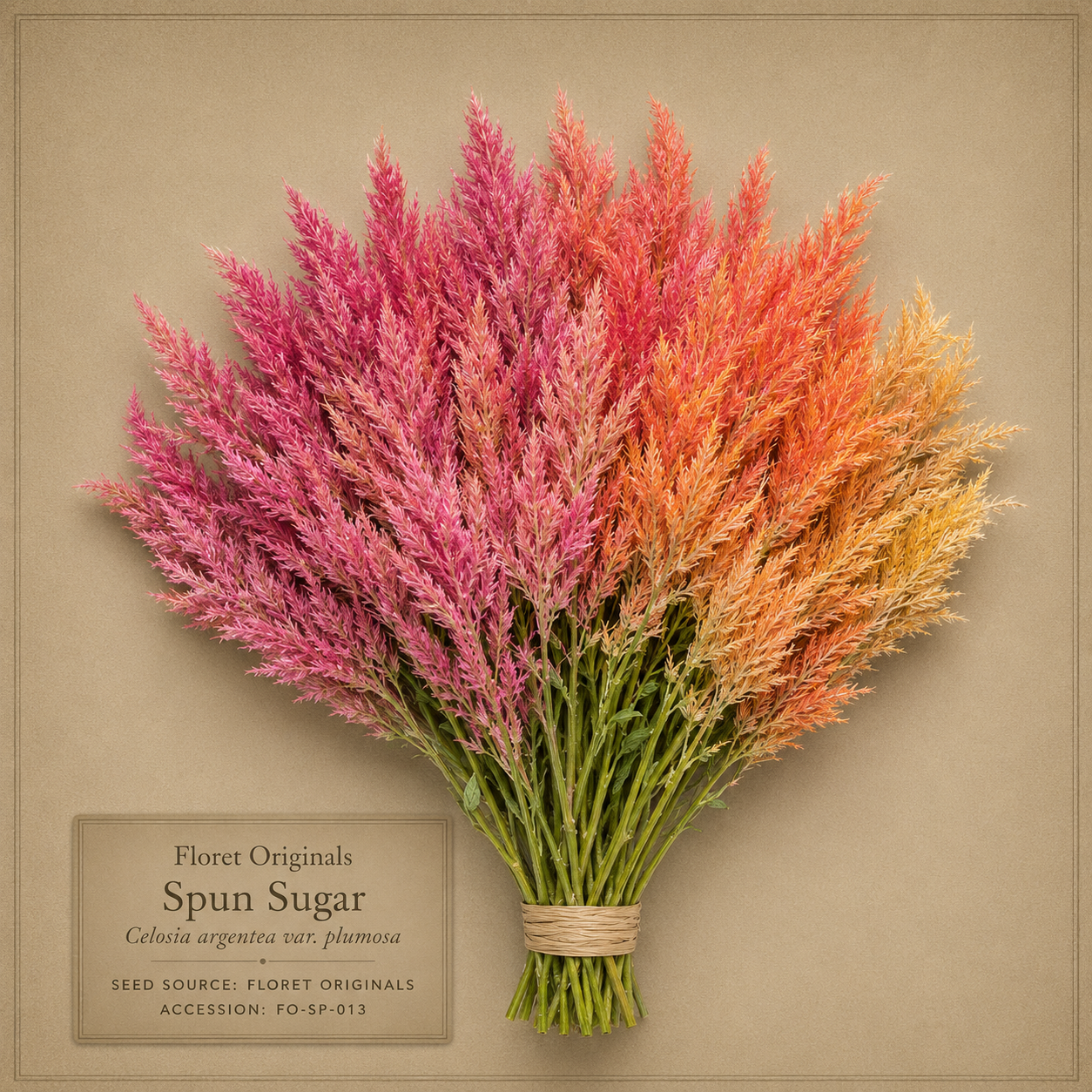
Spun Sugar
Plumosa · Pale / Cotton Candy
Pale, soft pink — called Cotton Candy in Queen Bee notes. Her airy, barely-there tone feeds the palest blush and ghostlight expressions in the second generation.
Floret Farm
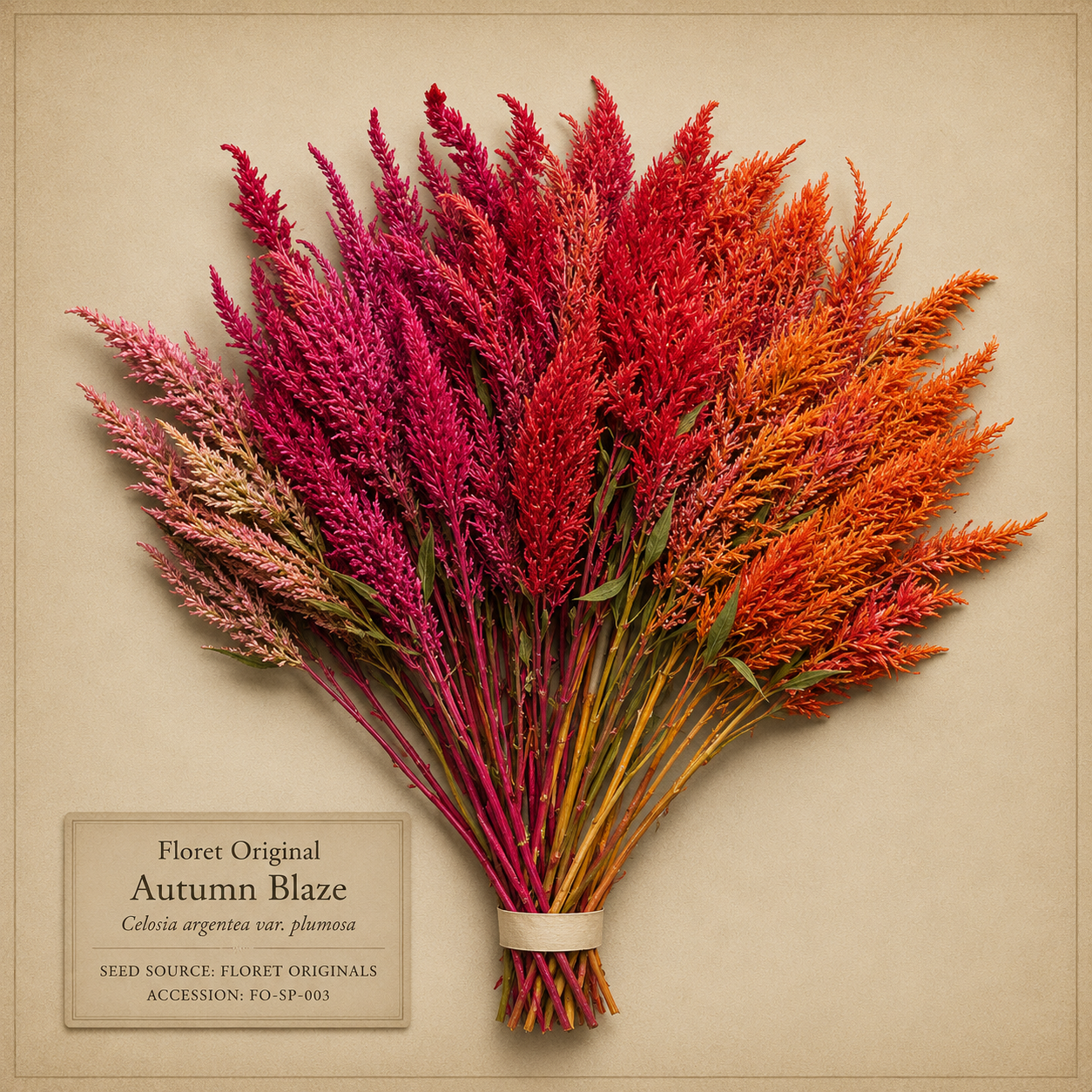
Autumn Blaze
Plumosa · Ember / Flame
Warm reds and ember tones. A likely contributor to the Sunfire and Flame color families that run through the rewilded population.
Floret Farm
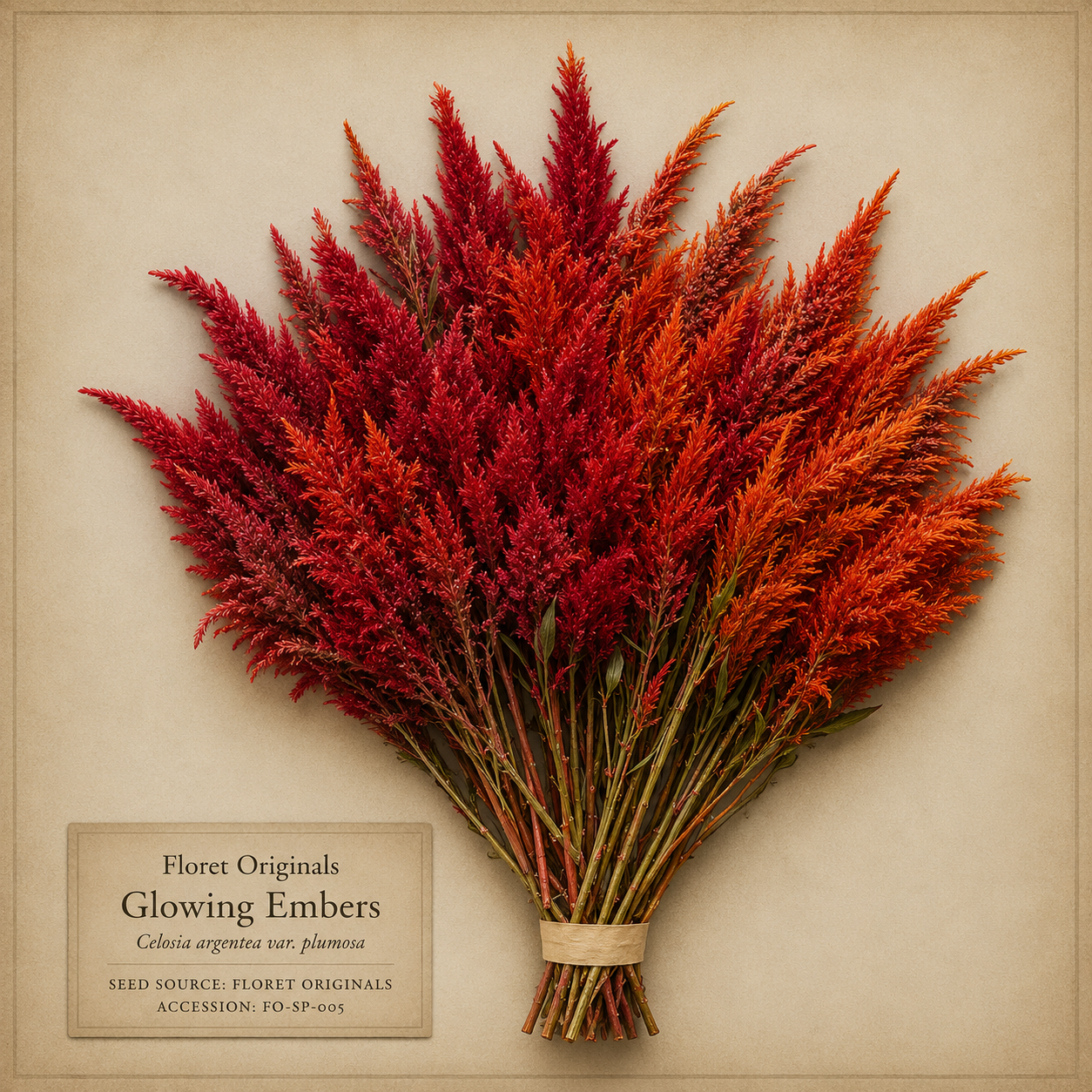
Glowing Embers
Plumosa · Deep Ember
Rich, deep ember tones — one of Floret's most saturated plumosa selections. Her genetics likely underlie the most intensely colored specimens in the collection.
Floret Farm
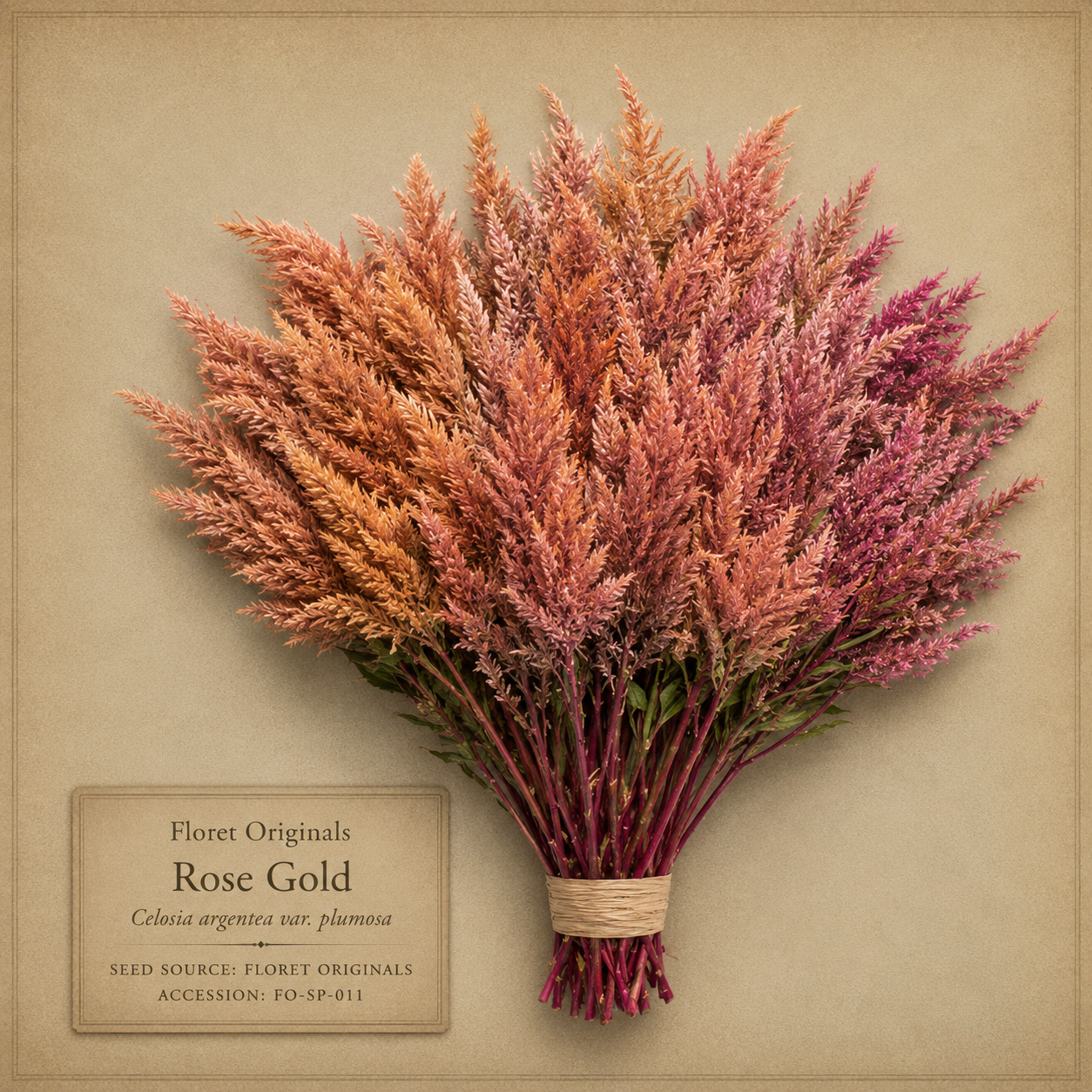
Rose Gold
Plumosa · Rosefire / Gold
A warm rose-gold plumosa. The rose-gold and blush-copper tones visible in several specimens — particularly the Gelato family — may carry her genetics.
Floret Farm
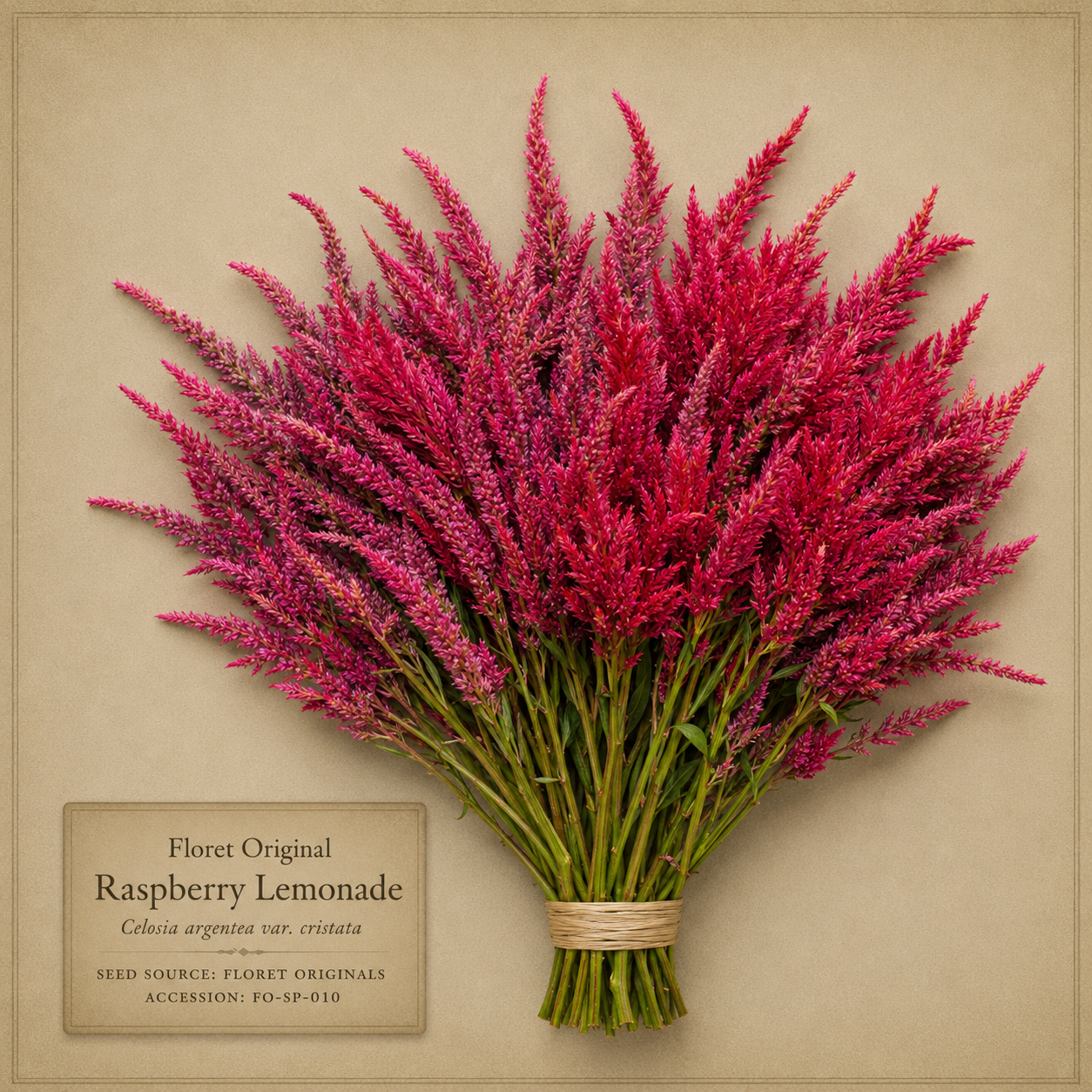
Raspberry Lemonade
Plumosa · Contrast Mix
Bright raspberry and lemon contrast tones. The high-contrast pink-and-yellow expressions in the rewilded beds may trace here.
Floret Farm
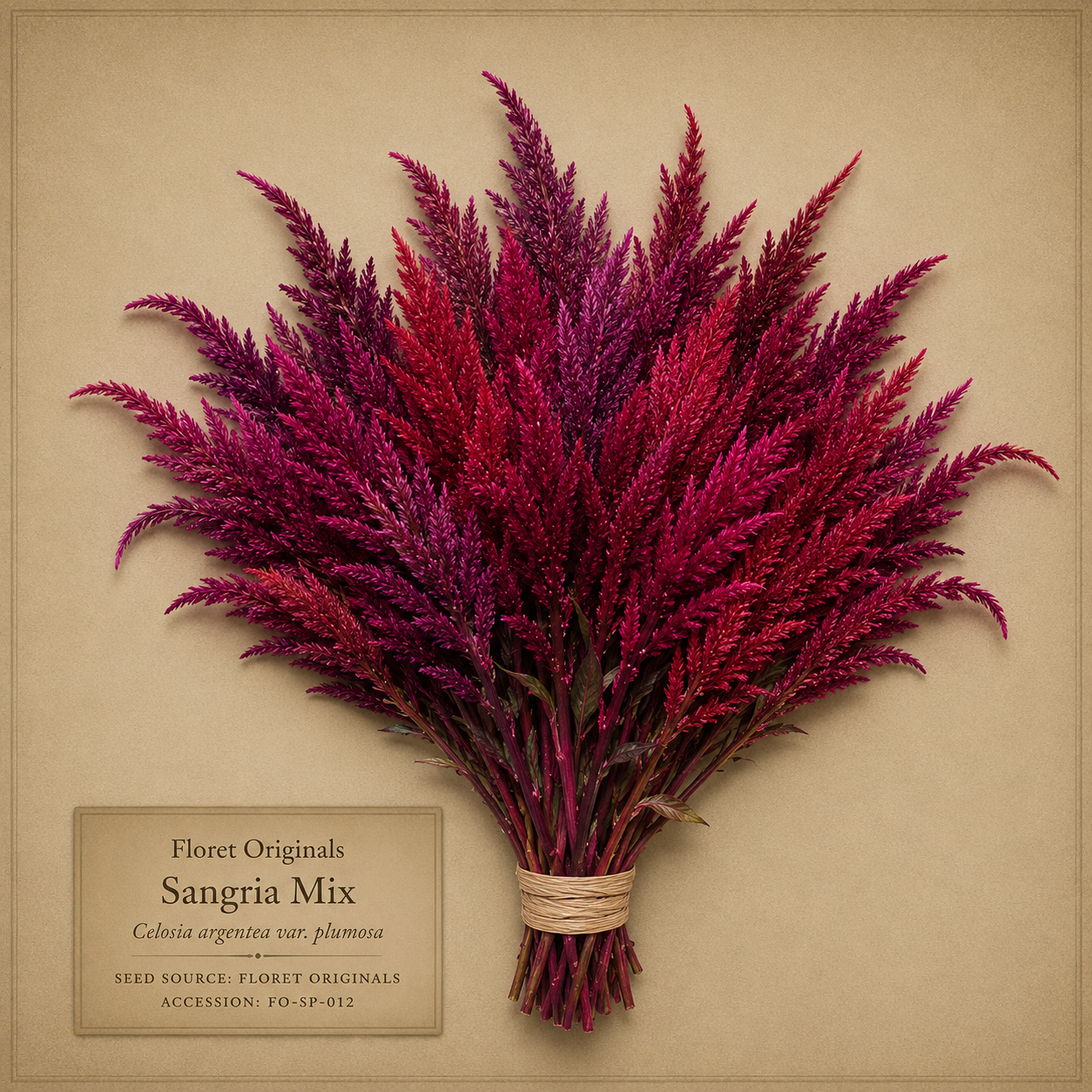
Sangria Mix
Plumosa · Deep Wine / Berry
Deep wine, berry, and burgundy tones. One of the likely parents behind the Beaujolais and deep-red Spicata specimens in the collection.
Floret Farm
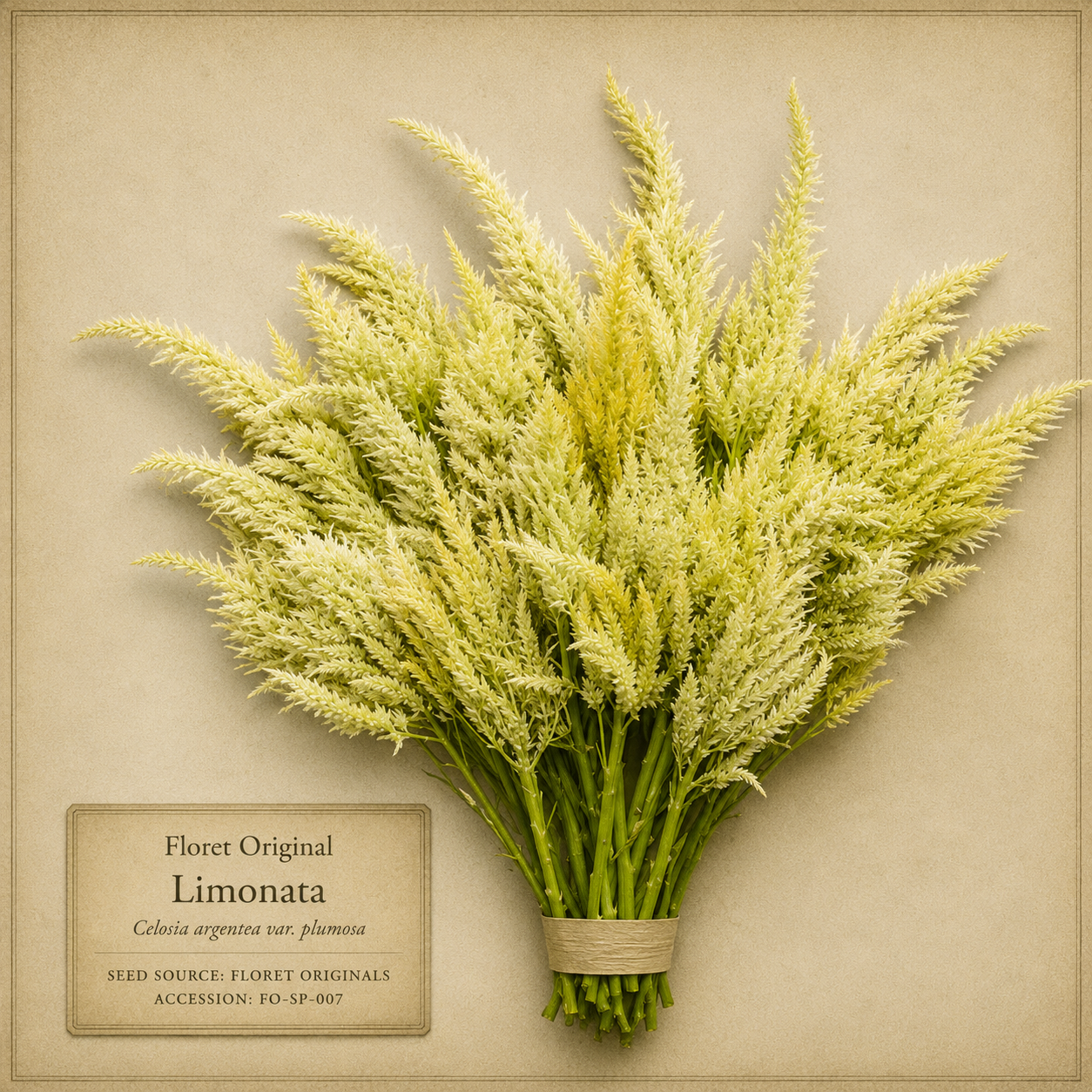
Limonata
Plumosa · Chartreuse / Ghostlight
Pale chartreuse-green plumosa with an almost ghostly luminosity. The rare Verdant Ghostlight expressions in the rewilded population may trace to this line.
Floret Farm
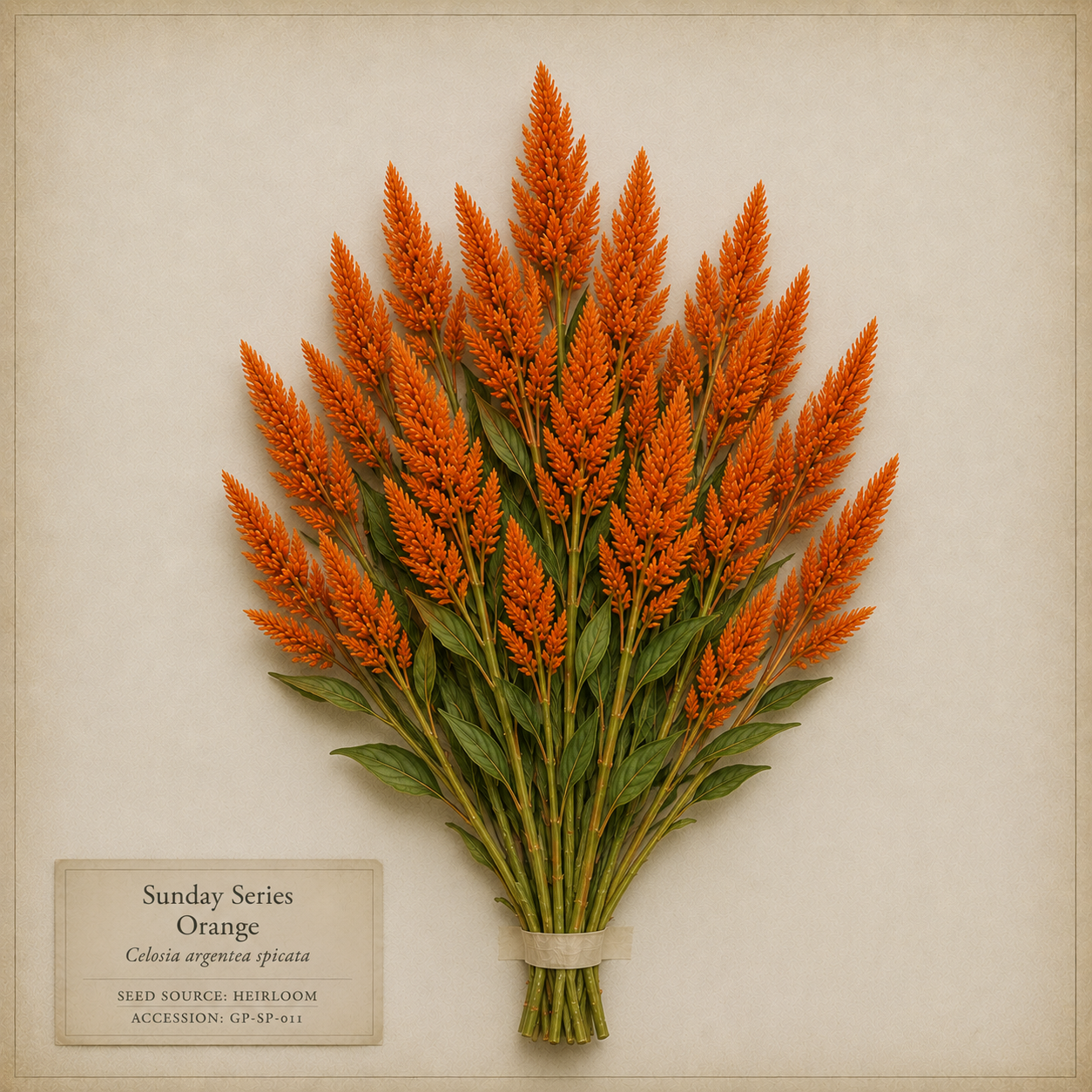
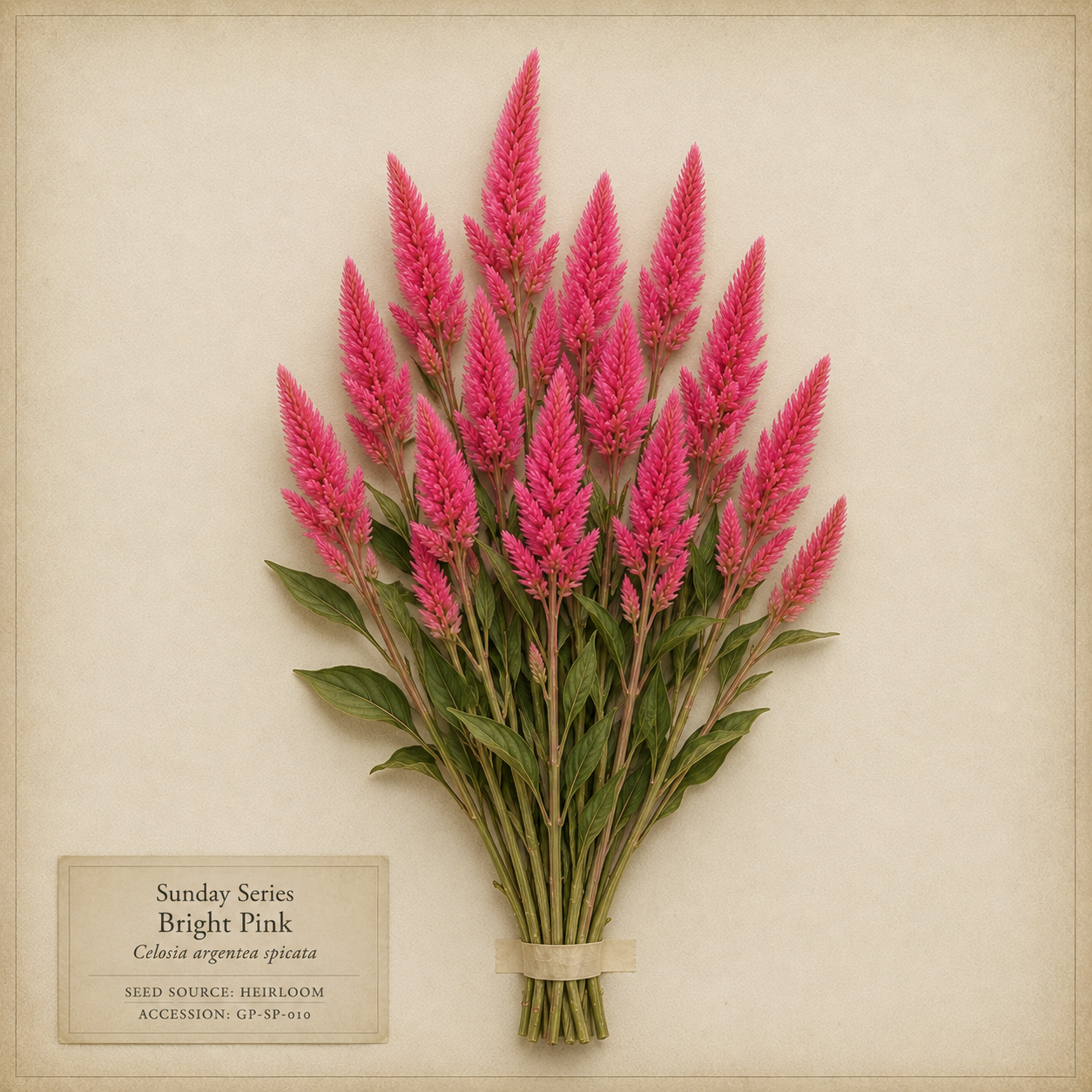
Sunday Series
Plumosa · Bright colors
Gold, Orange, Wine Red, Bright Pink. The Sunfire and Flame color families in the rewilded beds may descend from Sunday genetics.
Commercial · Ball Seed
Cristata Lines
The Crown Parents
The crested and crowned forms that contributed to the Phoenix Form specimens — plants that carry the Cristata gene but, when given space, find other expressions.
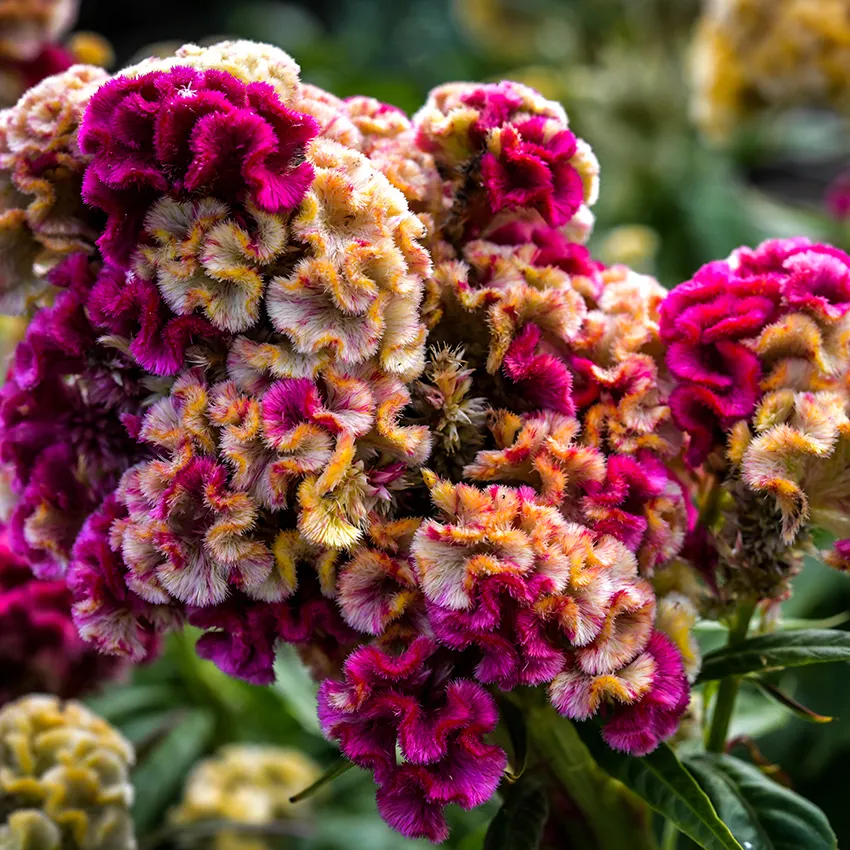
Cockscomb Variegated
Cristata · Ember / Verdant Ash
Classic cockscomb with variegated foliage. The armored texture found in Dragon Heart traces at least partly to Cristata parents like this one.
Commercial
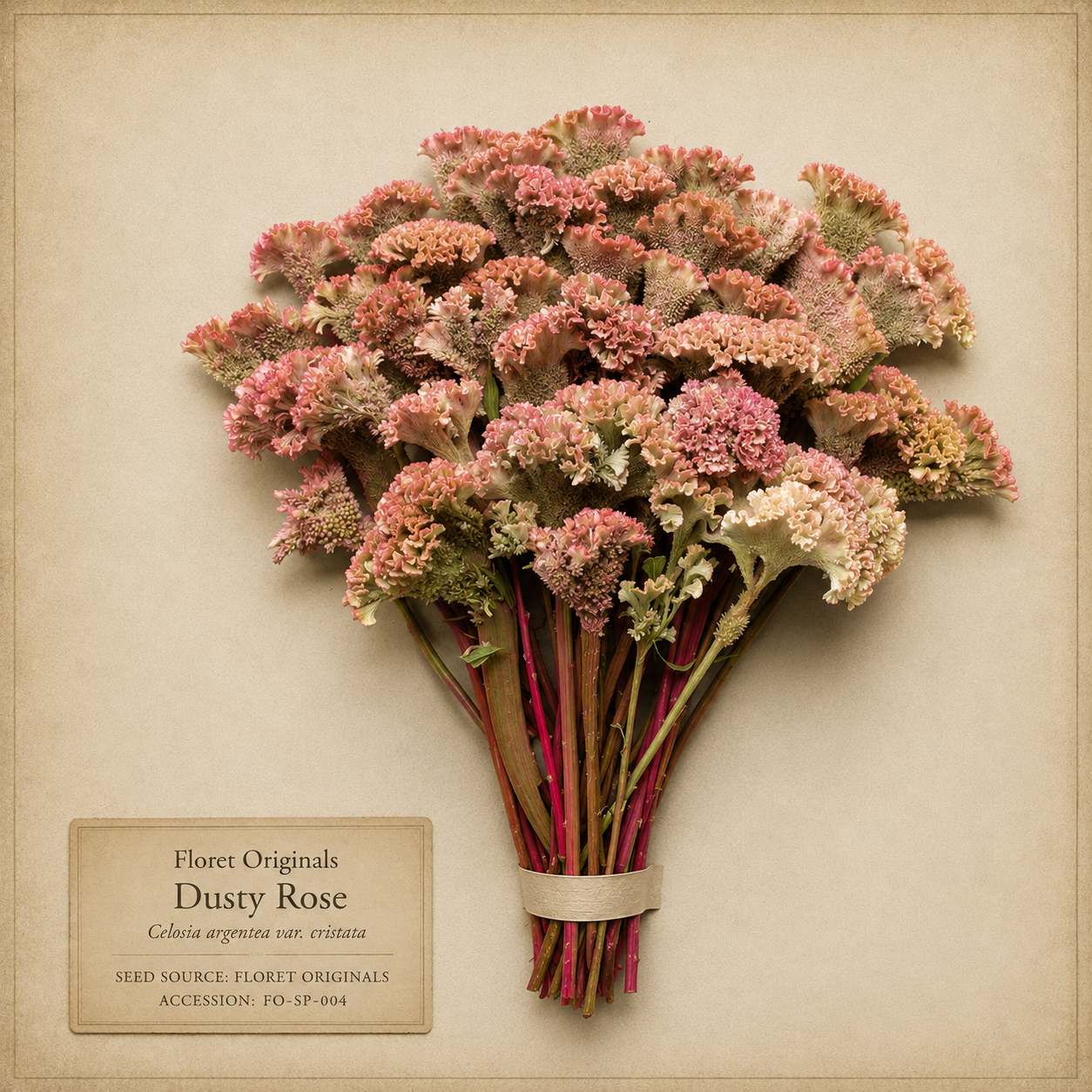
Dusty Rose
Cristata · Muted Rosefire
Floret's muted dusty-rose cristata. Her soft, aged tone appears in the blush cristata crosses and in the smoky veil coloring of several Phoenix Form specimens.
Floret Farm
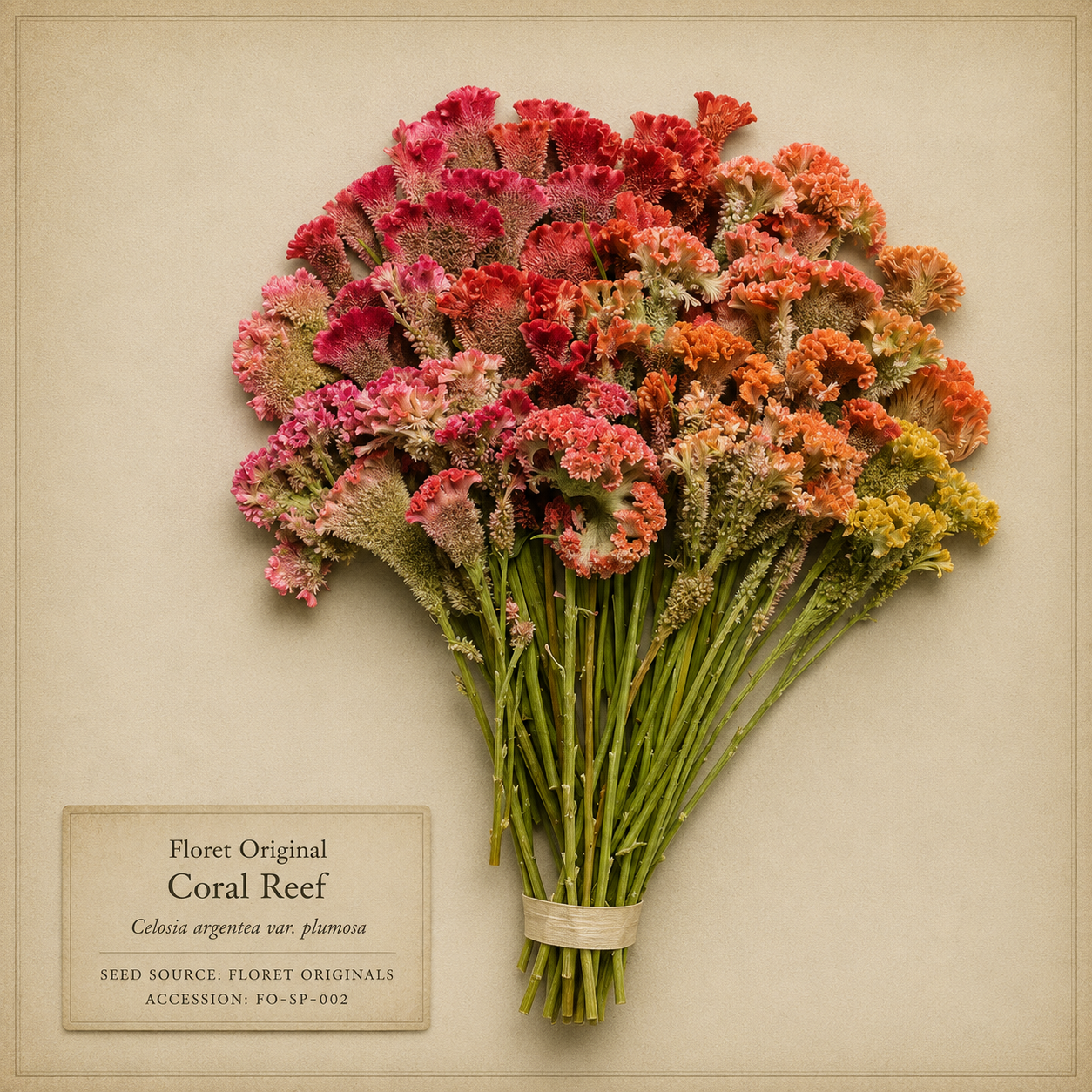
Coral Reef
Cristata · Coral / Ember
A bright coral cristata from Floret. Vivid and saturated — a probable contributor to the coral and warm-orange crest expressions in the rewilded cristata population.
Floret Farm
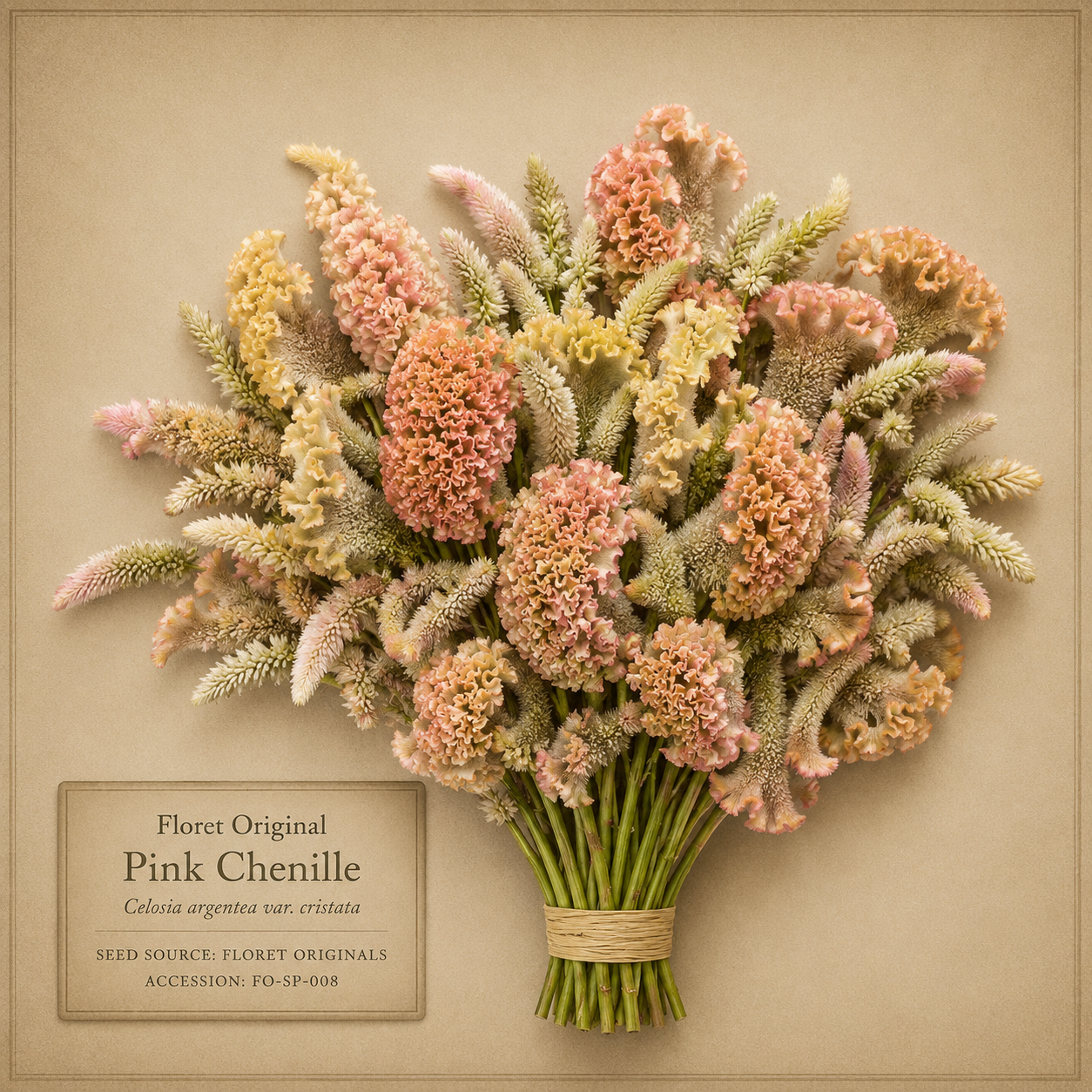
Pink Chenille
Cristata · Soft Pink / Textured
Floret's soft pink cristata with distinctive chenille texture. Her tactile, velvety expression shows up in the armored and textured crest specimens.
Floret Farm
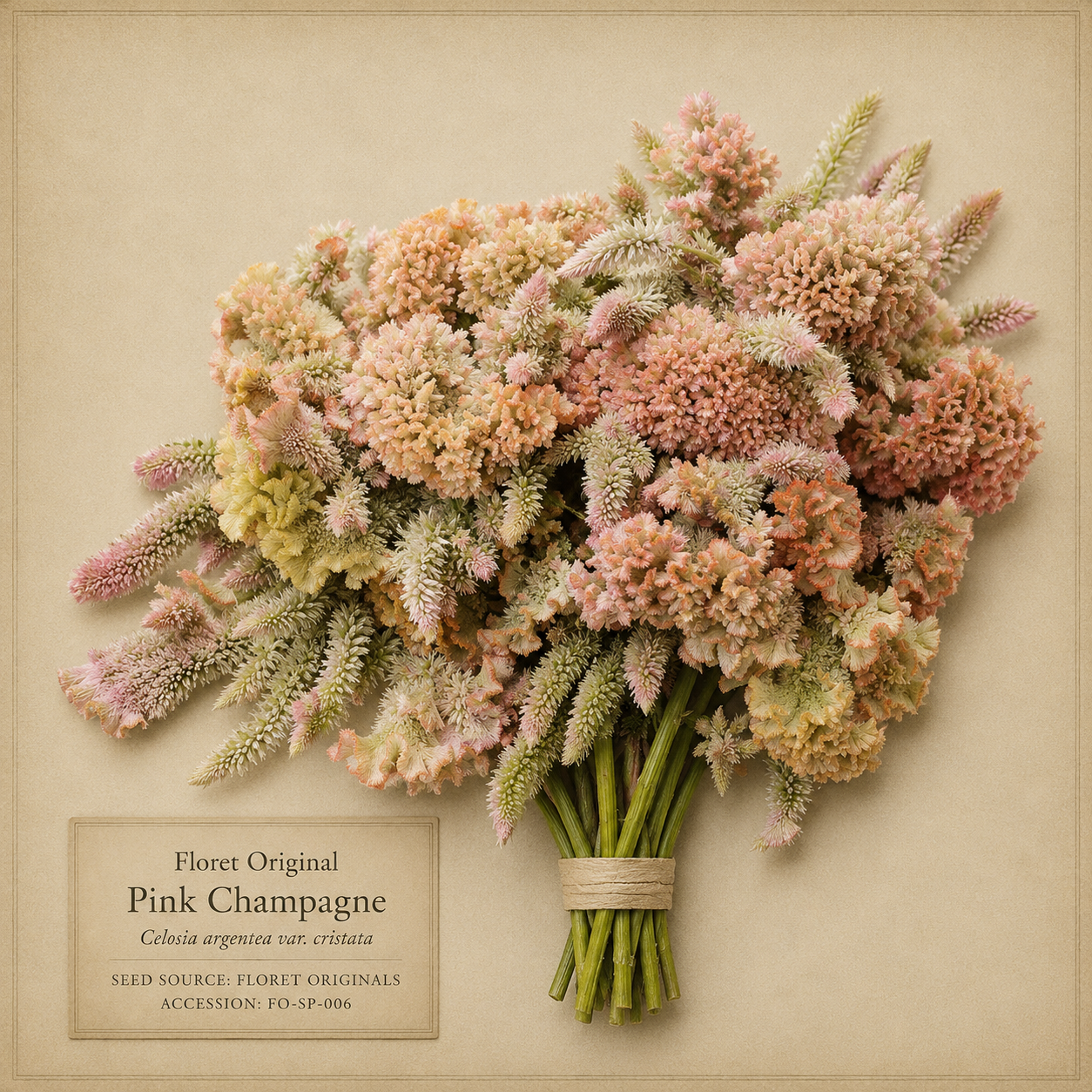
Pink Champagne
Cristata · Blush / Mixed
A soft blush cristata mix with gentle mixed tones. Her pale, bubbly color palette contributes to the quieter, more muted crest expressions in the population.
Floret Farm
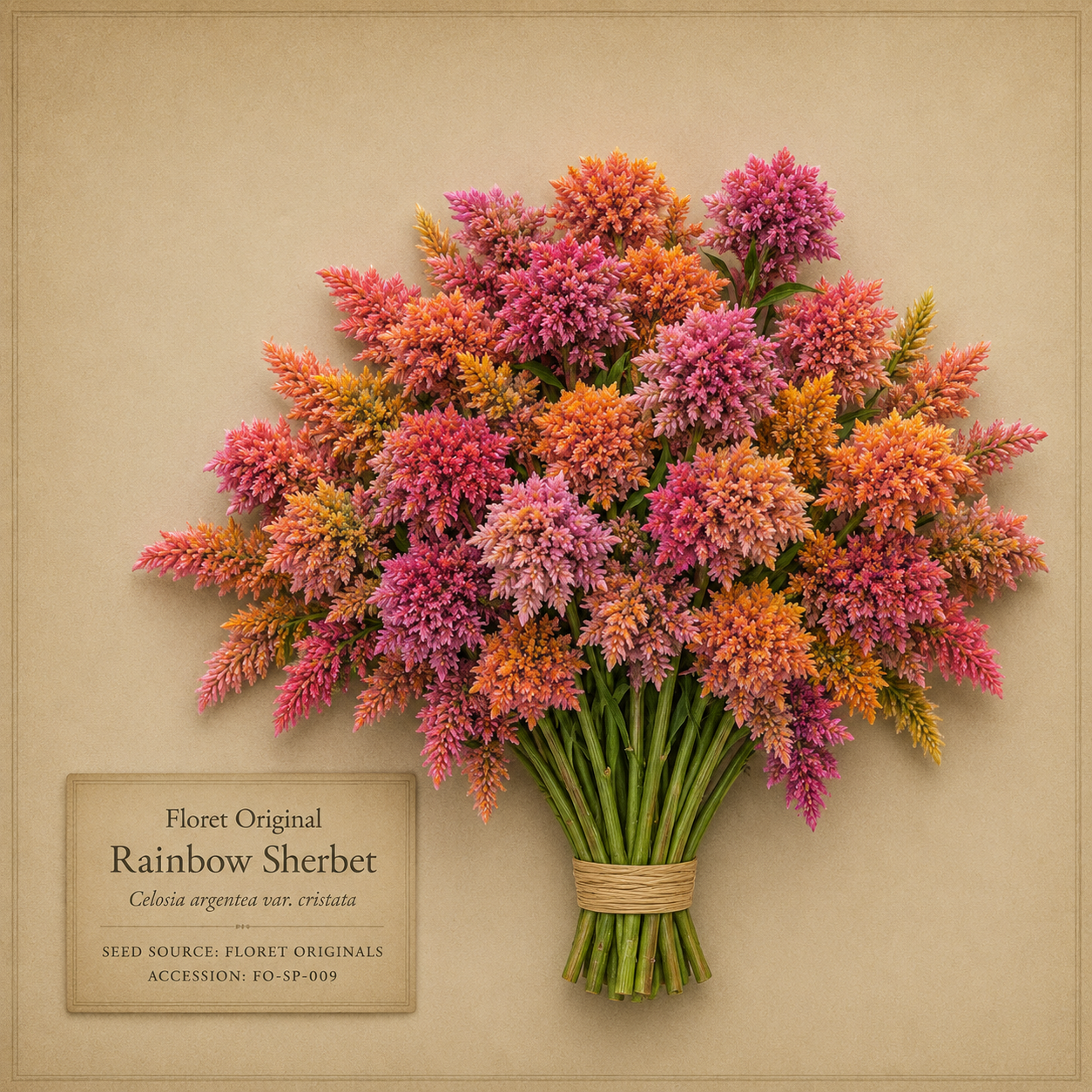
Rainbow Sherbet
Cristata · Warm Mix
A vibrant mixed cristata in warm sherbet tones — pink, orange, and gold together. A probable contributor to the high-contrast, multi-toned cristata forms in the rewilded population.
Floret Farm
Fantail Mix
Cristata · Mixed
Floret's mixed cristata selection — Dusty Rose, Pink Chenille, and Coral Reef together. Grown at Queen Bee in large quantities; the combined genetics of all three cristata lines run through the Phoenix Form population.
Floret Farm
Floret Cut Flower Celosia
Cristata · Plumosa · Mixed
Floret's breeding selection — chosen for cut flower longevity, stem length, and color. A significant parent in the Queen Bee population. Their 2014 study influenced the early Garden Phoenix documentation methodology.
Floret Farm
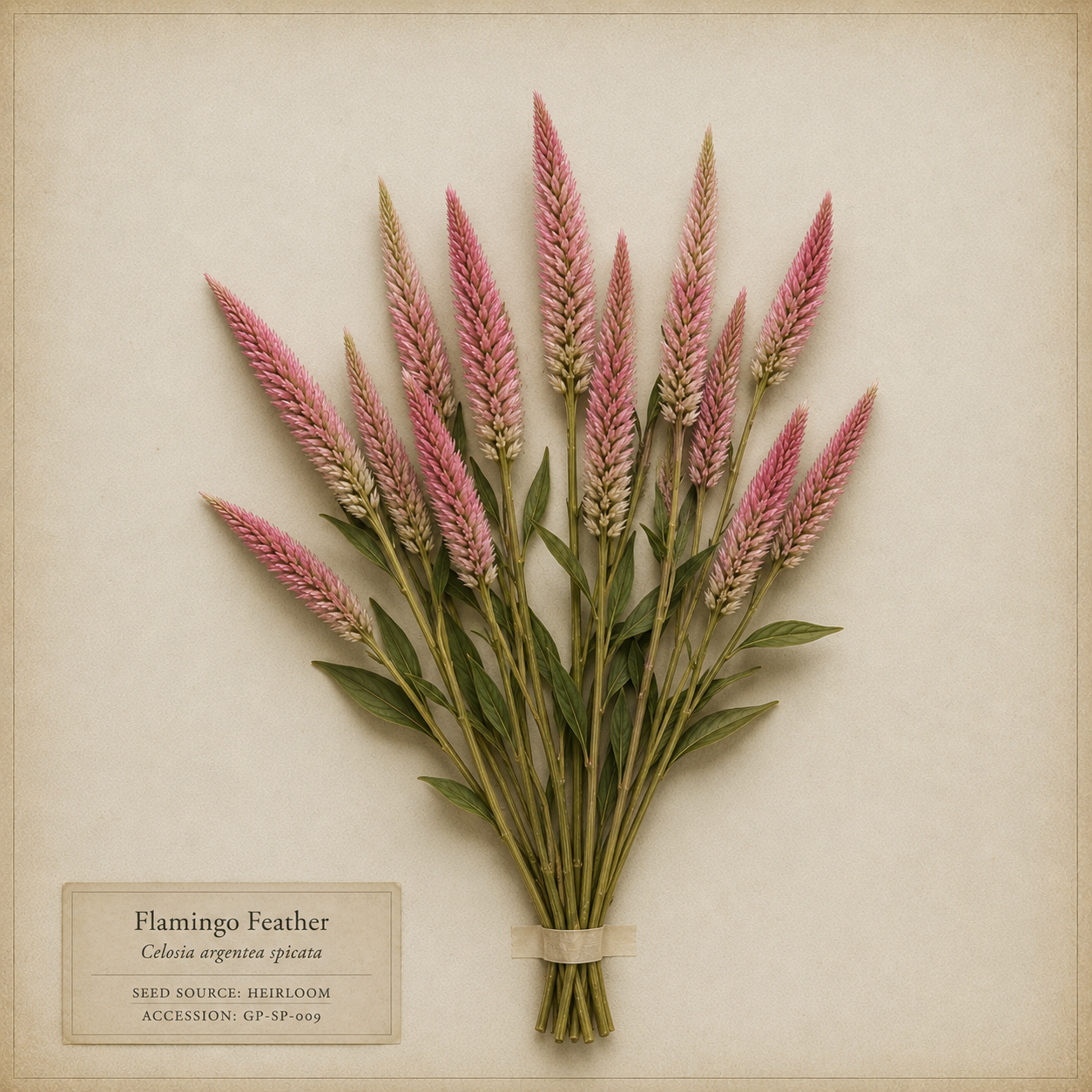
Flamingo Feather
Spicata · Ghostlight / Rosefire
Pale, feathered torches. A probable ancestor of Ghost Linen Spicata and Bridal Mix. The Ghostlight genetics in the torch forms trace here.
Commercial
Seed Sources
Where the Seeds Came From
Floret Farm
Cut Flower Specialist
Erin Benzakein's Floret program has been a significant influence on the Garden Phoenix documentation methodology, particularly the 2014 celosia study. Floret's breeding selections for cut flower characteristics are present in the Queen Bee population.
Johnny's Selected Seeds
Commercial · Specialty Cut
A primary commercial source. Johnny's celosia varieties — including their cut-flower selections — form part of the genetic background of the Queen Bee population. Their breeding for stem length and vase life has influenced the Altar Stem traits in named specimens.
Ball Seed
Commercial Wholesale
The Celway and Sunday series from Ball Seed contribute multiple color families to the mix, particularly the terracotta, purple, and warm-gold ranges that appear in several named specimens.
Open-Pollinated Seed Save
Queen Bee Blooms · On-Farm
Beginning with the first seasons of intentional seed saving, the Garden Phoenix population has increasingly diverged from its commercial origins. The most interesting specimens now come from seeds saved from the rewilded field — the children of children.
A note on rewilding
These commercial varieties were bred to be consistent. They were selected for predictability, uniformity, vase life, and market performance. They were not selected for freedom.
When grown together in close proximity, allowed to cross freely, and given successive generations to express their latent genetic range, they do something their breeders did not intend: they remember what they were before the selection pressure began.
That is what Garden Phoenix is witnessing. Not a mutation. A memory.